The pipeline
Why so few software developers are Black or Hispanic
An office of 100 U.S. software developers averages about 5 Black and 6 Hispanic engineers. That ratio is set long before anyone reaches an interview. It is visible in Texas classrooms at age 8.
· updated ·
It's a conversation engineers keep having: an office of 100 seats with only a few Black or Hispanic developers, and everyone wondering whether their company is unusually bad at this. Mostly it is not. Nationally, software developers are 5.4% Black and 6.1% Hispanic (39.8% Asian, 51.9% White; Hispanic overlaps the race categories, so the shares sum past 100), so a floor of 100 seats at the national rate holds five Black and six Hispanic engineers. For scale, Black workers are 12.7% of all U.S. employment, so the profession runs at less than half the Black share of the workforce at large.
Where does the ratio come from? Texas is a good place to look: it educates one in nine of America's public-school students and publishes outcomes for every campus by race. The tiering that shows up in the office shows up at every stage of school, in the same order.
The story does not end in third grade. College majors, internships, hiring, and retention all sit between the school data and the workforce number, and plenty thins out in stages nobody measures well. But the school stages alone already reproduce the ordering, which means the office conversation is aimed at the wrong end of the pipe. By the time a recruiter sees the resume pool, most of the narrowing has already happened.
The one lever this data keeps pointing at is placement into the advanced track. Universal screening raised Black gifted identification 80% and Hispanic 130% where it was tried, and Dallas's opt-out honors policy took Black enrollment in sixth-grade honors math from 17% to 43%. The stage-by-stage version, with a source under every number, is on the pipeline page.
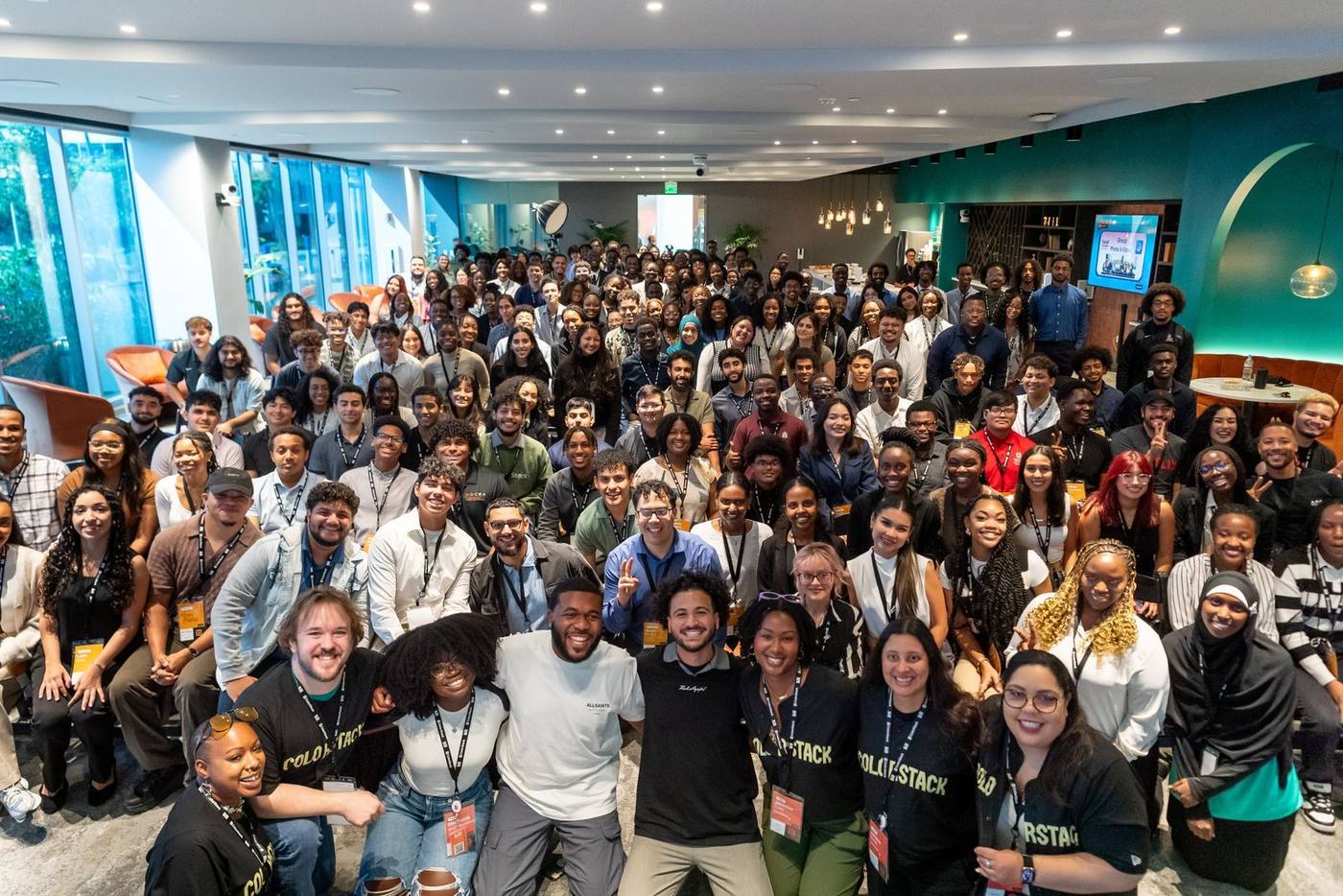
Policy fixes the school end of the pipe. The college-to-career end has organized help too: the students who do make it through are no longer expected to walk it alone. ColorStack, founded in 2020, is a nonprofit community of more than 13,000 Black and Latinx computer science students across 1,000+ schools, built to get its members degreed and hired: homework help and career coaching in a shared Slack, resume drops to 50+ partner companies, and a running channel of members announcing the offers they signed.
How does your school compare?
Every Texas campus, every student group, 2012–2025.